Tag: news

  • CORRUPTION and Hidden ROT in ACADEMIA

    CORRUPTION and Hidden ROT in ACADEMIA

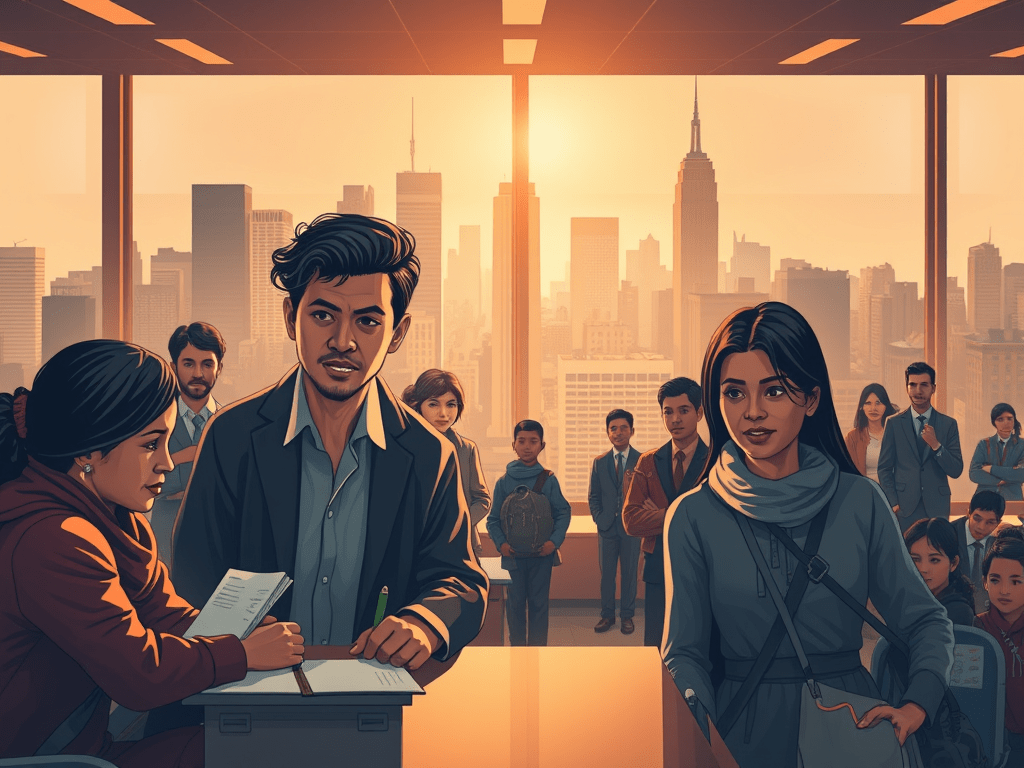
    Can you believe that even in academia — a realm we assume to be governed by intellect, ethics, and the pursuit of truth — corruption and abuse run deep? It is a gaping wound, festering beneath a carefully maintained surface of respectability and prestige. Beneath the surface lies a culture of nepotism, tribalism, favoritism, and collusion, where unethical behaviors are not only tolerated but often normalized among professors and administrators alike.

    Once, I believed such behaviors were confined to failing institutions — places consumed by ignorance or weak governance. But I was wrong. Corruption in academia isn’t limited to the margins; it thrives even in the world’s most prestigious universities. The very people who wear the title of “Doctor,” who boast PhDs and decades of experience, are often complicit in these systems — or worse, they are the architects of them.

    We often hear whispers — stories of harassment, exploitation, favoritism — but we dismiss them as isolated incidents, choosing to place our faith in a system that promises fairness, merit, and ethical conduct. That is, until it happens to us. Until we become the victims. That’s when our trust crumbles, and we start to see patterns where we once saw isolated cases. We begin to connect the dots, to form hypotheses about how power is wielded and abused behind closed doors.

    Sure, corruption exists in every field. But education? Academia? This is supposed to be different. Teachers and professors are expected to be among the most ethical, morally sound individuals in society. They don’t enter the field for money — or so we’re told. They enter to change the world, to ignite young minds, to pursue knowledge. But the reality, for many, is a far cry from that ideal.

    Academia has morphed into a competitive, high-stakes corporate environment — fighting for grants, prestige, publications, and rankings. In this pressure cooker, some professors misuse their power, demanding loyalty, favors, or even something worse — material or sexual “compensation” — in exchange for academic opportunities or career advancement. It’s a deep betrayal of what this profession is supposed to stand for.

    How did we get here? How did the moral compass in academia become so skewed?

    The PhD — short for Doctor of Philosophy — is considered the highest degree one can achieve. Society looks up to PhD holders as beacons of wisdom, rationality, and ethical behavior. But behind the curtain, some of these so-called experts lack basic emotional maturity, let alone intellectual integrity. Rather than mentoring the next generation with humility and grace, they act like insecure teenagers — jealous, competitive, and threatened by the very students they’re supposed to uplift.

    Some of them don’t even have true expertise in their field. They mask their incompetence with arrogance, elitism, or worse — through the silencing of critical voices, manipulation of systems, and abuse of students or junior scholars. Their corruption is not always loud. Sometimes it’s subtle — exclusion from opportunities, retaliation for dissent, or quiet deals made in back rooms.

    But no matter how it’s expressed, the damage is profound.

    Academia was meant to be a sanctuary for truth, dialogue, and growth. Instead, for many, it becomes a place of trauma, betrayal, and lost trust. And the worst part? The system often protects the abusers — because they’re the ones in power.

    Until we acknowledge this reality, nothing will change. The wound will stay open. The rot will spread. And the dream of an ethical, enlightened academy will remain just that — a dream.

    Please protect your soul!

    Nawal

  • The Theory of Racism

    The Theory of Racism

    After 50 years in this blue world, I think I come to believe that the idea of so-called racism is one of the greatest deception ever invented. It began with Satan, who was racist toward Adam. Out of jealousy, Satan cursed himself. Racism, at its core, is nothing but a reflection of weakness, incompetence, insecurity, and inner complexes.

    When someone behaves in a racist and exclusionary way, it reveals how threatened they feel by the very existence of others; others who may have discovered the keys to a decent and purposeful life. .

    A person who is at peace in their own skin, who love himself, and understands their goals is too busy walking their straight path to be distracted by hostility. Such a person does not need to steal others’ work to be noticed, does not need to crush others to be heard, and does not need to show hostility to advance.

    A well-read, well-travelled, well-educated human does not care if you are colorful or plain. He sees diversity as an enrichment, not a threat. What matters to them is whether you are respectful, and whether you are humble enough to recognize your weaknesses and be at peace with them.

    People should focus on growth, creativity, and contribution so they never feel the need to tear others down in order to feel valuable.

    History has shown us that oppressed people do not underachieve. On the contrary, racism often gives them wings; building resilience and developing unbounded strength.

    We are not born to compete or to show off; we are here to lift one another. And if you cannot do that because you have been raised around satanic ideologies. Then understand this: we know why you act racist and hostile. You have been exposed. You should hide that behavior, because no one cares about your incompetence and insecurities.

    Racism is not truly about its target; it is about the inner struggles of the one who holds prejudice. So the next time a racist person acts out, simply ignore them. Do not feed their darkness; it unfortunately sustains them.

    To the racist person: Stop telling us, through your action, that you are afraid, inadequate, and lacking belief in your own merit. The truth is, you can rebuild your life at any time, and under any circumstances. Stop projecting your ill mind onto others. Recover, and you will finally live in peace.

    If these words touched you, stay with me on this journey. Please subscribe and let’s keep lifting each other higher.

  • Is Immigration a Trap or a Way to Improve People’s Life?

    Is Immigration a Trap or a Way to Improve People’s Life?

    Will the World Ever See Immigrants as Partners in Progress, Rather Than People Who Must Constantly Justify Their Presence?

    Immigration has been a cornerstone of human history, shaping civilizations, bolstering economies, and enriching cultures worldwide. Individuals migrate for myriad reasons: economic opportunities, political instability, education, and personal safety. While the benefits of immigration are evident, it also presents challenges for both migrants and host countries.

    Advantages of Immigration:

    For Host Countries:
    Immigrants significantly contribute to economic growth by expanding the labor force and increasing consumer spending. Notably, as of 2024, 46% of all Fortune 500 companies were founded by immigrants or their children, underscoring their pivotal role in driving innovation and entrepreneurship. ​American Immigration Council

    For Immigrants:
    Relocating to a new country often grants access to enhanced opportunities, including superior education, healthcare, and personal safety, culminating in an improved quality of life.

    Drawbacks of Immigration:

    For Immigrants:
    Integrating into a new society can be daunting. Challenges such as identity crises, discrimination, and cultural barriers can impede adaptation.

    For Home Countries:
    Developing nations often experience “brain drain,” where skilled professionals emigrate for better prospects abroad, potentially hindering domestic economic and developmental progress. ​

    For Host Countries:
    Assimilating large immigrant populations necessitates policies that promote social cohesion. In certain instances, immigration can lead to labor exploitation or intensify anti-immigrant sentiments.

    The Hidden Cost of Immigration: Is it a System Built on Exploitation?

    Immigration is frequently depicted as a gateway to opportunity—a fresh start in a land of promise. Yet, for numerous skilled immigrants, the reality is more complex. Instead of seamlessly integrating into their new societies, they often face systemic barriers that compel them to start anew, not due to a lack of talent or qualifications, but because the system profits from their struggle. This raises an uncomfortable question: Is immigration structured to uplift individuals or to exploit them?

    Not All Immigrants Contribute. Let’s Talk About That Too.

    It’s an uncomfortable truth that some immigrants may not seek to uplift or contribute meaningfully. They might misuse the system, expect rewards without effort, and, regrettably, some may raise children without instilling discipline, values, or ambition. This can perpetuate cycles of dependency and tarnish the reputation of the broader immigrant community.

    However, this isn’t solely an immigrant issue; it’s a human issue. Every society has individuals who take rather than give, who blame instead of build. Whether native-born or foreign-born, traits like laziness, entitlement, and poor parenting are universal challenges. That said, when such behaviors are exhibited by immigrants, they can be more pronounced, as immigrants are initially guests in their new countries. Guests, especially in host nations facing their own struggles, have a moral and cultural responsibility to contribute positively, show respect, and raise their children to be constructive members of society.

    Why Do People Migrate?

    Migration is driven by a blend of personal aspirations and pressing needs. At its core, migration often revolves around seeking a better life—though “better” varies for each individual. Key reasons include:

    1. Economic Opportunity:
      Many migrate to find jobs, escape poverty, or earn more than they could at home. For instance, immigrants have helped expand the U.S. labor supply, paying nearly $580 billion a year in taxes and possessing a spending power of $1.6 trillion annually. 
    2. Education:
      Pursuing better schooling, higher education, or training opportunities, often for themselves or their children’s future.
    3. Safety and Escape:
      Fleeing war, violence, persecution, or disasters. Some are refugees seeking safety where their lives or beliefs are not threatened.​
    4. Family and Love:
      Reuniting with loved ones, marrying, or raising children in a more stable or promising environment.
    5. Climate and Environment:
      Escaping drought, floods, or environmental degradation that make living or farming untenable.
    6. Freedom and Dignity:
      Seeking freedom of expression, religion, or identity—basic human rights that might be denied in their home country.

    Is Immigration a Normal Cycle of Life?

    Migration, undertaken with courage and dignity, is among humanity’s oldest and most potent means of adaptation, growth, and survival. It should be honored, not feared. Immigration is not just normal; it’s natural and ancient. Since humanity’s inception, people have moved—from one village to another, one continent to the next—in search of safety, survival, connection, and growth.

    • We are explorers by nature:
      Humans have always moved to adapt to climate, find food, or chase opportunity.
    • Civilizations were built by migrants:
      From the Silk Road to the Americas, movement has shaped culture, language, and innovation.
    • Change is constant:
      Economic shifts, wars, education, and love push and pull people across borders, generation after generation.

    Even our DNA testifies to this: we are all mixed. Every person alive is a living product of human movement. Immigration is not a disruption of life; it is life. The desire to move toward something better is one of the most hopeful and human instincts. Every wave of migration renews the world with fresh energy, ideas, and resilience.

    Why Do Host Countries Struggle to See the Added Value of Immigrants?

    Host countries often grapple with recognizing the added value of immigrants due to a mix of fear, misunderstanding, and short-sightedness. Here’s why:

    1. Fear of Change:
      People naturally cling to what they know. When new languages, cultures, or customs emerge, some feel their identity is being threatened, even when it’s not.
    2. Limited Awareness:
      Many don’t see how immigrants fill essential roles: growing food, caring for elders, building homes, or driving innovation. For example, immigrants constitute over 25% of agricultural workers and 54.3% of graders and sorters of agricultural products in the U.S. ​ 
    3. Economic Anxiety:
      In times of job loss or inflation, immigrants become scapegoats. Some believe they’re “taking” jobs or resources, though research shows immigrants often create more jobs and contribute more to taxes than they receive in services.
    4. Negative Narratives:
      Media and politics can fuel suspicion. Instead of highlighting the hardworking immigrant mother, the brilliant student, or the devoted nurse, stories often focus on crime or division.
    5. Lack of Connection:
      It’s easy to fear people you don’t know. But when someone knows an immigrant personally, their perception changes. Empathy replaces assumption.

    Immigrants are bridges, not burdens. They carry not just labor but loyalty, sacrifice, and dreams. Often working twice as hard for half the recognition. If host countries opened their eyes and hearts, they’d see immigrants not as “others,” but as co-builders of a shared future.

    Why is there still “illegal immigration”?

    Because borders still exist in a world where needs don’t. People are hungry, scared, ambitious, or simply seeking dignity. When the legal doors are too small or shut tight, people knock harder—or climb over.

    The root causes of illegal immigration are rarely about law-breaking, they’re about lifesaving.

    Why are borders still here, if we all struggle anyway?

    The world is interconnected, yet we hold onto borders because of:

    • National identity: People fear losing their culture or language.
    • Security concerns: Governments want to control who enters.
    • Resource distribution: Some fear that more people will stretch public services.
    • Power dynamics: Wealthy countries benefit from a system where labor is cheap, but control is tight.

    Borders are often less about protection, more about preserving advantage.

    What could be the solution?

    There’s no one-size-fits-all, but real change must begin with compassion and realism:

    1. Fix the Root Causes

    If people didn’t have to flee hunger, violence, or despair, they wouldn’t. That means global cooperation to invest in education, stability, and opportunity where people live.

    2. Build Fairer Pathways

    Simplify and expand legal immigration, especially for workers, students, and families. Make the process humane, not humiliating.

    3. Respect Human Rights

    No matter how someone enters, treat them with dignity. Undocumented does not mean undeserving.

    4. Redesign Borders as Bridges

    Controlled openness: we can protect public safety while welcoming those who want to build and contribute. It’s not about erasing borders. It’s about rethinking their purpose.

    It seems to me that the future isn’t “open borders,” but open minds and shared responsibility. Because if one of us is drowning, the answer isn’t to build a higher wall, but it’s to extend a hand.

    The former UN Secretary-General Kofi Annan once said:

    “We need to keep in mind that migration is not a problem to be solved, but a human reality to be managed.”

    If this message spoke to your heart or opened your mind, don’t forget to comment, subscribe, and share with someone who needs to hear it. And stay tuned for Part Two, where we’ll explore how immigrants navigate life in the U.S. with courage and resilience.

  • The Usefulness of College: A Path to Success or Just a Debt Trap?

    The Usefulness of College: A Path to Success or Just a Debt Trap?

    I’ve graduated from three colleges, so I’m not here to bash college or discourage anyone from attending. In fact, I believe my last day will be spent at a university because education is a powerful tool. But here’s the thing: not all degrees are created equal. If you’re considering going to college for a degree that won’t set you up for success—one that will just leave you buried in debt with little to show for it—please, reconsider.

    College is Not a Party

    College isn’t a free-for-all where you get to experience everything you were never allowed to do at home. It’s not about partying, getting into trouble, or creating unnecessary drama. College is an opportunity to develop your independence and prepare for the future. It’s a time to step into the real world and face life’s challenges. Think of it as the ultimate training ground for life. But just like any trip, the journey can either lead you to your dream destination or take you down a path you’ll regret.

    The Hard Truth About College

    According to a 2020 report by the National Center for Education Statistics, nearly 40% of college students drop out before finishing their degree. Why? Because they’re unprepared for the academic and financial challenges college brings, and they don’t always have a clear purpose for why they’re there. That’s why it’s crucial to understand: if you’re just there for the “experience,” or a degree you’re not passionate about, you might end up wasting both your time and money.

    Instead of having a blast with friends, partying, or worrying about relationships, college should be about learning to make great decisions. It’s about choosing the path that leads to personal growth and professional success, not the one that’s lined with distractions.

    The Road to Success

    Your college experience can be either a steppingstone to your future career or a pitfall that sets you back. Statistics show that students who graduate with a degree that aligns with their career goals are more likely to succeed. According to the Bureau of Labor Statistics, individuals with a bachelor’s degree earn on average 67% more than those with only a high school diploma. But here’s the catch: a degree is only worth it if it leads you to a field with demand. For example, degrees in STEM (Science, Technology, Engineering, Mathematics) fields offer higher starting salaries and job security compared to degrees in areas like liberal arts or fine arts, where opportunities can be scarce.

    Making the Most of Your College Years

    College is the time to decide whether you want to dive deep into your chosen field or just skim the surface. It’s about mastering your subject, not just completing assignments for the sake of a grade. Students who use their time wisely, who are focused from day one, often end up landing their first job right after graduation or even starting their own business.

    But if you choose the road of “fun” and constant distractions, you might find yourself unprepared for what’s next. College isn’t about how many parties you attend or how much free time you have. It’s about building skills, knowledge, and discipline that will last you a lifetime.

    Choosing the Right Path

    There are countless roads to success, and college can help you take the right one. But beware, there’s also the road that leads to wasted potential—full of distractions and bad decisions. So, make your time in college count. Be smart about your choices, know what you want to achieve, and take action to make it happen.

    Ultimately, a degree can be a powerful tool, but it’s up to you to make sure it’s one that will serve your future goals, not just a piece of paper that leaves you with a mountain of debt and few opportunities.

    So, before you head to college, take a hard look at what you want to achieve. If you’re willing to put in the work, stay focused, and make the most of every opportunity, college can open doors you never thought possible.

    If you found this helpful, don’t forget to hit the subscribe button so you never miss an update! I’d love to hear your thoughts—do you agree with what I said about college, or do you have a different perspective? Drop a comment below and let’s start a conversation!