Tag: marriage

  • Immigration topic part two: 

    Immigration topic part two: 

    Leaving to Live: How I Rebuilt My Life in a Foreign Land

    I didn’t come to the United States chasing the American dream. I came looking for peace. Back home, I had what many would envy: career, stability, beauty, and family nearby. But what I also had was a darkness that never lifted: toxic, chaotic relationships that poisoned every joy.
    No matter how much we gave, how kind we were, we couldn’t fix the people who broke everything good.

    My husband and I made a hard, almost unthinkable decision: We left. We weren’t poor. We weren’t running from war. We were simply choosing to breathe again.

    Starting Over in Silence

    Arriving in a new country with no network, no clear path, and little understanding of the culture was like being born again, but without the celebration. I had to learn English in my 30s. I had to take jobs far below my education and work ethic. I had to smile when I wanted to cry. And I had to stay kind when the world assumed I was naive. But every day, I showed up. For my family. For my children. And for myself. Over time, I found myself growing not bitter, but stronger. Not louder, but wiser. Not harder, but clearer.

    What I Learned (and What I Wish I Knew Sooner)

    If you’re a new immigrant or just a person trying to start over, please hear this:

    1. Peace is more important than pride.
    Leaving people behind who hurt you isn’t weakness. It’s wisdom. You cannot heal in the same environment that sickened you.

    2. Language is a bridge, not a wall.
    You can always learn a new language, no matter your age. Be patient with yourself. You are not dumb—you are expanding.

    3. Your dignity is your compass.
    Some people will underestimate you. Don’t shrink. Keep showing up with grace, and life will open doors no title ever could.

    4. Your pain can become your power.
    Tell your story. Not for pity, but for purpose. Someone out there needs to know they are not alone.

    5. Children see everything.
    My kids have watched me fight through tears, juggle jobs, study late, and never give up. And they are becoming lights in this world because of that example.

    I’m Still Building

    I’m still not where I want to be yet. But I no longer feel like a ghost in my own life. I’m learning every day. I’m speaking up. I’m dreaming again. And now, I’m sharing what I’ve learned, so someone else can rise a little sooner than I did.

    To every immigrant, every woman rebuilding herself, every soul escaping pain to start over. You are not lost. You are becoming. We don’t sell stories to be seen. We put soul in them to heal.

    — Noelle Sophie
  • The Paradox of Overpopulation and Resource Scarcity.

    The Paradox of Overpopulation and Resource Scarcity.

    How Did We End Up with Eight Billion People? Fate, Mismanagement, or Sheer Negligence?

    I often find myself pondering a question that few dare to ask: How did we, as a species, reach a staggering eight billion people? Is it destiny and fate, or is it the result of poor decision-making and reckless management? More importantly, how do so many struggles for survival while the numbers continue to rise?

    One of the most perplexing realities I observe is the tendency of financially struggling individuals to get married and have children. Why do so many bring innocent souls into hardship, knowing they lack the means to provide a dignified life? Shouldn’t parenthood be a privilege reserved for those who are both financially and emotionally capable?

    A World of Scarcity or Unequal Distribution?

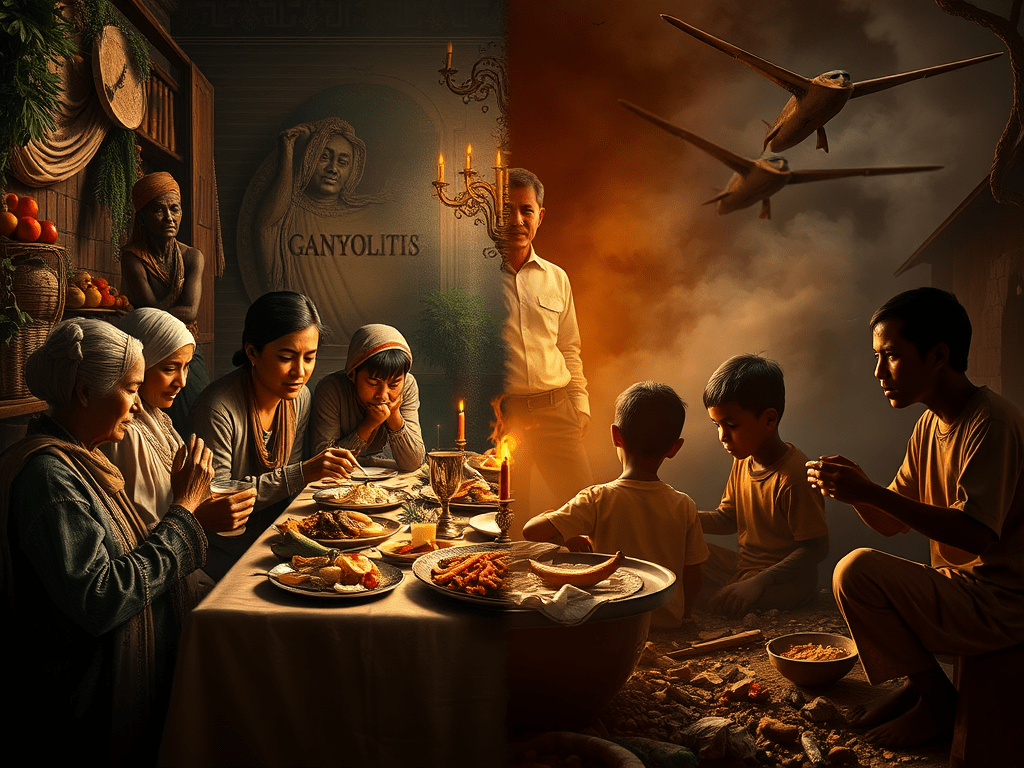
    Many argue that the Earth has enough resources to sustain its inhabitants. According to the Food and Agriculture Organization (FAO), the world produces enough food to feed 10 billion people. Yet, more than 735 million people suffer from chronic hunger. The issue isn’t production; it’s distribution. Wealth and resources remain concentrated in the hands of a few, while billions struggle to secure basic needs.

    The paradox is unsettling: some nations deal with obesity-related health crises, while others face starvation. Some individuals amass wealth beyond comprehension, while millions cannot afford shelter. If resources exist, why do we fail to ensure fair access? Is this inequality a natural order, or is it a symptom of human greed and systemic failure?

    The Responsibility of Marriage and Parenthood

    I once read that only men who are both financially and emotionally stable should marry. In Islam, this principle is clear: a man who cannot provide for a family is advised to fast and lower his gaze until he becomes capable. Yet, we often see the opposite; people entering marriage without preparation, bringing children into uncertainty, and expecting society to carry the burden.

    When I decided to start a family, I was a teacher. My husband and I were aware of the financial challenges ahead, but we had the foresight and discipline to ensure that our children would never endure hunger or parental neglect. Parenthood is not just about the desire to have children; it’s about the ability to nurture and support them in every possible way.

    Divorce: A Consequence of Unprepared Marriages

    One of the devastating consequences of rushed, unprepared marriages is divorce. Globally, divorce rates have been rising, and the effects on children are profound. In the United States, nearly 40–50% of marriages end in divorce. In some countries, the rates are even higher, particularly in urbanized societies where economic and social pressures create additional strain on families.

    Divorce can have severe emotional, psychological, and financial consequences for children:

    • Emotional and Psychological Distress: Studies show that children of divorced parents are more likely to experience anxiety, depression, and lower self-esteem. A 2019 study published in the Journal of Family Psychology found that children from divorced families are twice as likely to suffer from mental health issues compared to those from intact families.
    • Financial Hardship: Divorce often leads to financial instability, particularly for single-parent households. Research indicates that nearly 50% of single mothers in the U.S. live in poverty or face economic hardships after divorce, making it difficult to provide for their children’s education and well-being.
    • Academic and Social Struggles: Children of divorced parents are more likely to perform poorly in school and exhibit behavioral problems. A study by the National Bureau of Economic Research found that divorce negatively impacts children’s educational attainment, often reducing their likelihood of pursuing higher education.
    • Increased Risk of Future Divorce: Statistics suggest that children of divorced parents are more likely to divorce when they grow up. They often struggle with commitment and relationship stability due to witnessing their parents’ failed marriage.

    While some divorces are necessary, especially in cases of abuse or toxicity, many could have been prevented with better preparation, financial stability, and emotional maturity before marriage.

    A Logical Perspective on Humanity’s Future

    I am a realist. I examine life’s struggles and successes with logic rather than blind emotion. If we, as a global society, wish to progress toward a just and sustainable world, we must confront these difficult questions. Are we suffering because there are too many of us, or because we have failed to manage our resources and responsibilities wisely?

    A wise society should prioritize creating conditions where every human being can reach their full potential. This means ensuring access to education, healthcare, and economic opportunities before individuals embark on the lifelong commitment of marriage and parenthood. The children we bring into this world should not bear the consequences of our ignorance, selfishness, or lack of foresight.

    Final Reflections

    After almost thirty years of marriage, I feel compelled to share these insights; not as judgments, but as reflections from experience. If we seek to build a fair and sustainable world, we must start by questioning the choices we make at the most fundamental levels of life. It is not just about bringing more people into existence; it is about ensuring that every human life is valued, nurtured, and given a fair chance to thrive.

    If you enjoyed this post, please consider subscribing and leaving a comment. Your feedback is greatly appreciated. Thank you for your support!

  • The Essential Traits of a Great Man: A Modern Discussion

    The Essential Traits of a Great Man: A Modern Discussion

    Who has the authority to answer this question? Should we ask wives, friends, mothers, fathers, or rely on studies that predict human behavior based on statistical analysis? Society often labels men in various ways—there are males, men, and great men. But what truly sets an exceptional man apart?

    At its core, what defines a man?

    Some argue that a man is someone born to take responsibility—to provide for his family. But does that mean a man who can’t support is any less of a man? Others believe that a man’s role is to protect. But what does protection mean? Protection from what, and for whom?

    I have known men who were excellent providers yet lacked kindness—does that make them less of a man? I have also known men who were weak in physical strength but had unshakable emotional resilience. Does that make them incomplete? I have met men who neither provided nor protected in the conventional sense but were patient, kind, and understanding.

    So, what truly defines a great man?

    As a woman, I know what I seek in a man.

    I want a man who listens without judgment. A man who protects me—not just from external threats but from my own self-doubt and impulsive ideas. I need a man who understands the intricate rhythms of my hormones. A man who respects the changes in my body and mind throughout the different stages of life. I need a man who cherishes my wrinkles at 60 just as he adored my youthful face at 20.

    A great man stands by his woman through storms and sunshine. He sees only her, remains faithful in heart and mind, and never lets fleeting temptations shake his commitment. Studies suggest that emotional intelligence is one of the strongest predictors of relationship satisfaction. So, an exceptional man cultivates this skill.

    I need a man who is honest, strong, ambitious, well-read, and—above all—responsible. A man raised by a warrior mother and a father who led with integrity. A man who pays attention to details, who shares his deepest thoughts with me, and values mine in return. A man who neither seeks to change me nor diminish me. but rather elevates me, supporting my dreams while grounding me with wisdom.

    An exceptional man is never stagnant—he is curious, driven, and unafraid to explore his options until he is satisfied with the outcome. He does not settle for mediocrity, nor does he shy away from new opportunities for growth. He is intellectually hungry, continuously learning and evolving. He values knowledge as much as he values strength.

    A great man corrects with love, never humiliates. He encourages me to reach my full potential and appreciates my efforts, no matter how small. He shields me from unnecessary criticism, especially in front of others, and never allows anyone—including his own family—to disrespect me. Research shows that healthy relationships thrive when partners defend each other against external negativity, and I need a man who upholds that principle.

    My man does not escape into addictions—he does not do drugs, smoke, or gamble. He is disciplined, wise, and self-controlled. He knows that true masculinity is not about dominance but about presence, consistency, and emotional strength.

    Above all, my man sees me. He values my voice. He respects my existence not just as his partner, but as a whole person with thoughts, desires, and ambitions. I need a man who rushes home because being with me is his greatest joy, and who leaves the house with reluctance because parting, even briefly, is never easy.

    If you reach your senior years with your man—healthy, beautiful, and strong—know that you were loved by a truly great man.

    I believe this is the man that every woman truly desires. Not perfection, but commitment. Not just strength, but tenderness. Not just provision, but presence.

    And, that is what makes a man exceptional.

    What do you think makes a man exceptional? Share your thoughts in the comments!
    If this resonates with you, share it with someone who values deep connections!