A Vision of an Effective, Joyful, Student-Centered Classroom for all
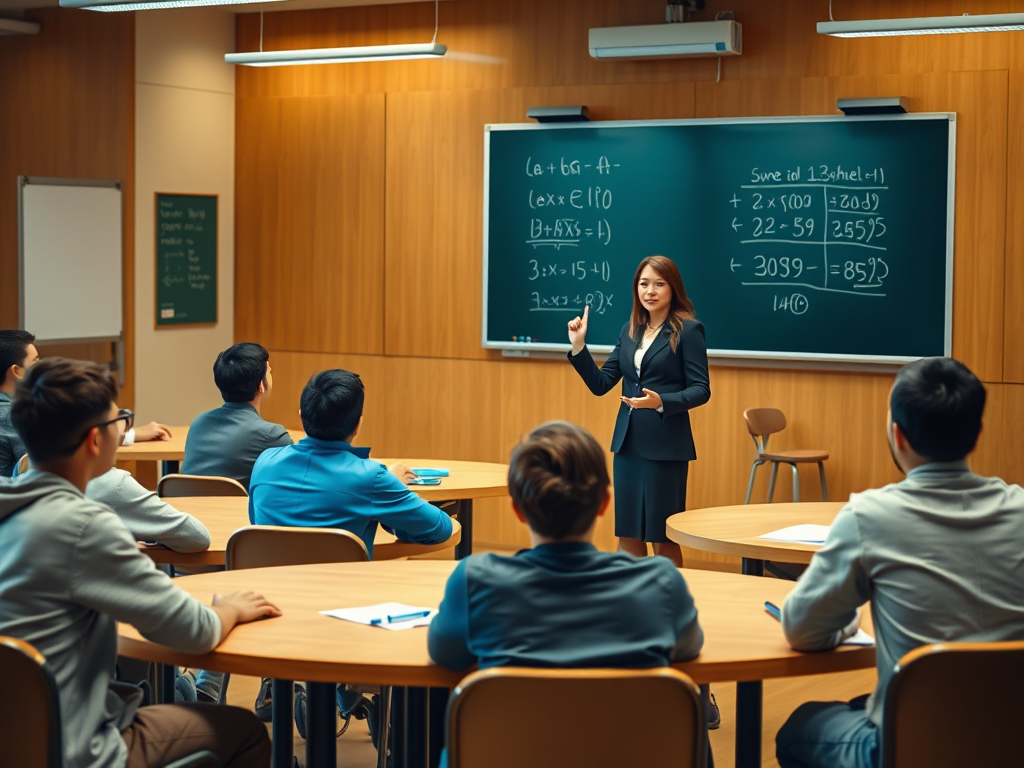
I wish to be in a classroom where teaching is effective, students are at the center of education, and learning is joyful and engaging. I see a space where every student feels seen, supported, and empowered; where visuals, projects, and group study methods replace passive listening and transform learning into active exploration.
In this ideal classroom, learning is not a transfer of facts but an invitation to think, create, and connect. John Dewey, a foundational thinker in progressive education, wrote in My Pedagogic Creed that “education is not preparation for life; education is life itself” Teaching and learning are continuous, meaningful, and rooted in experience.
This classroom thrives on student engagement and interaction. Discussions are vibrant and respectful. Students explain their thinking aloud — what mathematicians call math talk — because they practice reasoning, articulation, and critique together. Herbert R. Kohl, an advocate for alternative education, believed in the open classroom where students explore ideas collaboratively and creatively.
Teachers in this space are facilitators of learning, not merely transmitters of content. They guide students to make connections between ideas, ask essential questions, and pursue projects that integrate knowledge across disciplines. Projects are real: building models, solving open-ended problems, creating visual representations, and working in small teams to learn from one another. Anne Haas Dyson emphasizes that “there is nothing lonelier than standing in front of a class when I’m not sure they are intellectually with me, and nothing is more satisfying than when we are all making progress together.”
The learning environment respects differences in styles and strengths. Students are joyful, confident, and proud to learn. They use visuals, group methods, and relevant technology when appropriate. They feel comfortable asking questions and pursuing deeper understanding. This aligns with contemporary research on active learning and learner-centered teaching routines, which show that structured group discussion and student responsibility improve understanding and participation.
Students are the heart of the classroom. This vision reflects the educational culture seen in high-performing systems like in Estonia, where students are encouraged to learn deeply and think critically. Estonia consistently ranks at the top in international assessments and nurtures environments where learners can explore and grow.
In such a classroom:
Teaching is effective: aligned with students’ needs and interests.
Students are joyful and engaged: learning feels purposeful, not forced.
Activities are interactive: visuals, projects, math talk, and group work promote deep understanding.
Everyone thrives: each student contributes and learns from the group.
This classroom is more than a space, it is a culture of curiosity, respect, and growth. It is where every learner is both a student and a teacher, and where education builds not only academic skills but confidence, collaboration, and a lifelong love of learning.
In many countries, teachers hold a position of great respect. They are valued even above doctors or engineers, for they shape minds, cultivate logic, and guide the future. Teaching is recognized as a noble profession, a calling, and a responsibility to the next generation.
Yet here in the United States, the same dedication is often reduced to a job title, a paycheck, or a stepping stone for those who “couldn’t do better.” Some teachers themselves speak poorly about the profession, implying they are forced into it or that it is only for those who failed elsewhere. Their words, combined with cold or indifferent behavior, make the noble work of teaching appear irrelevant or unworthy.
The reality is stark: teacher salaries are often compared unfavorably to jobs in fast food, despite the enormous responsibility of educating a generation. Classrooms are demanding and, at times, intimidating spaces. The culture can be harsh, leaving even the best educators burned out, unappreciated, and questioning their path. As a result, the United States risks losing its most talented teachers, those who could ignite curiosity, passion, and purpose in young minds.
But teaching is not about prestige or profit; it is about impact. Every student whose curiosity is sparked, whose confidence is built, whose life is changed, is a testament to the power of education. The teacher’s reward is invisible, yet immense: a society that grows in wisdom, empathy, and integrity.
I have chosen this path not because I could not pursue wealth or status, but because I believe in the transformative power of education. And though society may not always recognize it, our students do. One day, they will look back and remember the educators who gave them not just knowledge, but the belief that they could achieve anything.
America must recognize that a teacher’s work is priceless. To invest in education is to invest in our collective future. To respect teachers is to respect the very foundation upon which society stands.
Please remember: Teachers are like candles; they give light to others while quietly burning themselves. In classrooms across America, many brilliant educators burn brightly despite low pay, cold attitudes, and overwhelming demands. Yet their impact, though invisible, shapes generations.🌹
Respect good teachers and call out the bad ones, those bad apples are ruining this noble field!
Education is the foundation of any society. It shapes the future of individuals, communities, and nations. In the U.S., though, the education system is facing deep-rooted issues. These issues are affecting not only students but also the overall well-being of society. Despite being one of the wealthiest nations in the world, the U.S. fails to offer a fair and high-quality education to all children. This failure has created a system that produces an alarming number of unprepared graduates. This contributes to societal problems like poverty, crime, and inequality. If the U.S. wants to regain its position as a leader in global education, it must radically reform its education system.
The Current State of U.S. Education
One of the biggest issues facing the U.S. education system today is the vast disparity between schools. While some schools—typically those in affluent areas—offer world-class education, others, especially in poorer neighborhoods, are severely underfunded and under-resourced. These schools often lack basic educational materials. Items like textbooks, computers, and trained teachers are missing. This leaves students at a significant disadvantage. According to recent reports, U.S. schools spend more on education per student than most countries, yet the outcomes are mediocre at best.
Another issue is the focus on standardized testing. While some argue that testing helps assess students’ progress, it often fails to capture a student’s true potential. These tests place immense pressure on students. They focus on rote memorization rather than creativity, critical thinking, and problem-solving. These skills are vital in the real world. The emphasis on testing also ignores the emotional and social development of students, which is equally important for long-term success.
The Root Causes of the Problems
The issues within the U.S. education system are symptoms of a larger societal problem. It stems from the failure of policymakers to focus on education. They also neglect the well-being of children. Many policymakers often send their children to elite private schools or have them study abroad. They have little understanding of the struggles faced by children in underfunded public schools. This creates a disconnect between the government and the communities it claims to serve.
The education system seems to treat students as products to be processed. They are not seen as individuals with unique needs and potential. This mindset is perpetuated by a profit-driven educational model. It often results in students being “trained” for cheap labor or criminal activity. Students are not educated to become thoughtful, independent, and creative individuals. The lack of value placed on teachers also contributes to the problem. Teachers, who are at the heart of the education system, are often underpaid, overworked, and undervalued. As a result, many talented individuals are discouraged from pursuing teaching careers.
A Call for Change
To fix the education system, we must start by acknowledging the root causes of its problems. We should rethink our approach to teaching and learning. Education can not merely be about pushing students through a system of tests and grades. It must be about fostering critical thinking, creativity, and emotional intelligence.
The first step toward reform is to place value on teachers. Teachers are the backbone of the education system, yet they are often the most undervalued professionals in society. To improve education, we need to pay teachers competitively—on par with doctors and tech professionals. We need to give them the support and resources they need to thrive in the classroom. Teachers should be continuously trained. They should be equipped with knowledge of human development, psychology, and cultural sociology. This way, they can adapt to the needs of every student. Teachers should have a deep understanding of the subjects they teach. This enables them to inspire passion. It also fosters curiosity in their students.
Next, we must redesign the curriculum. It should focus on the skills that matter most in the 21st century. These include critical thinking, problem-solving, collaboration, and empathy. Schools should not just teach students how to pass tests but how to approach problems in creative and innovative ways. Project-based learning, hands-on activities, and real-world applications should replace outdated rote memorization techniques.
Standardized testing should be drastically reduced. Assessments should measure a student’s ability to think critically. They should gauge how students collaborate with others and apply their knowledge. Tests should not decide a student’s future success. Instead, a more holistic approach should be used to evaluate their potential.
Finally, it is crucial that we tackle the funding gap between schools in wealthy and impoverished neighborhoods. No child should be at a disadvantage because of their zip code. This means reforming the way schools are funded, so that every student, regardless of background, has access to quality education. We should also empower parents to advocate for their children’s education. They should consider alternatives, like homeschooling or private schools, if the public system fails to meet their needs. Nonetheless, we must make sure that these alternatives do not lead to a further segregation of the educational system.
The U.S. education system is in desperate need of reform. To create a society where every child can succeed, we must invest in teachers. We need to rethink the curriculum and reduce the reliance on standardized tests. It is crucial to guarantee fair access to resources for all students. By doing so, we can cultivate a generation of students who are not only academically proficient but also socially responsible. They will be emotionally intelligent. They will also be equipped to tackle the challenges of the future. It’s time for policymakers to stop prioritizing their own interests and start serving the children who will shape the future. Only then can we start to rebuild the educational system. It will become one that is truly worthy of the children it is meant to serve.
To my readers:
Thank you for taking the time to leave your thoughts! I truly appreciate your feedback and encourage you to share more insights in the comments below! If you enjoyed the content, please consider subscribing to my website for more updates!


 Community Empowerment