A Vision of an Effective, Joyful, Student-Centered Classroom for all
I wish to be in a classroom where teaching is effective, students are at the center of education, and learning is joyful and engaging. I see a space where every student feels seen, supported, and empowered; where visuals, projects, and group study methods replace passive listening and transform learning into active exploration.
In this ideal classroom, learning is not a transfer of facts but an invitation to think, create, and connect. John Dewey, a foundational thinker in progressive education, wrote in My Pedagogic Creed that “education is not preparation for life; education is life itself” Teaching and learning are continuous, meaningful, and rooted in experience.
This classroom thrives on student engagement and interaction. Discussions are vibrant and respectful. Students explain their thinking aloud — what mathematicians call math talk — because they practice reasoning, articulation, and critique together. Herbert R. Kohl, an advocate for alternative education, believed in the open classroom where students explore ideas collaboratively and creatively.
Teachers in this space are facilitators of learning, not merely transmitters of content. They guide students to make connections between ideas, ask essential questions, and pursue projects that integrate knowledge across disciplines. Projects are real: building models, solving open-ended problems, creating visual representations, and working in small teams to learn from one another. Anne Haas Dyson emphasizes that “there is nothing lonelier than standing in front of a class when I’m not sure they are intellectually with me, and nothing is more satisfying than when we are all making progress together.”
The learning environment respects differences in styles and strengths. Students are joyful, confident, and proud to learn. They use visuals, group methods, and relevant technology when appropriate. They feel comfortable asking questions and pursuing deeper understanding. This aligns with contemporary research on active learning and learner-centered teaching routines, which show that structured group discussion and student responsibility improve understanding and participation.
Students are the heart of the classroom. This vision reflects the educational culture seen in high-performing systems like in Estonia, where students are encouraged to learn deeply and think critically. Estonia consistently ranks at the top in international assessments and nurtures environments where learners can explore and grow.
In such a classroom:
Teaching is effective: aligned with students’ needs and interests.
Students are joyful and engaged: learning feels purposeful, not forced.
Activities are interactive: visuals, projects, math talk, and group work promote deep understanding.
Everyone thrives: each student contributes and learns from the group.
This classroom is more than a space, it is a culture of curiosity, respect, and growth. It is where every learner is both a student and a teacher, and where education builds not only academic skills but confidence, collaboration, and a lifelong love of learning.
In many countries, teachers hold a position of great respect. They are valued even above doctors or engineers, for they shape minds, cultivate logic, and guide the future. Teaching is recognized as a noble profession, a calling, and a responsibility to the next generation.
Yet here in the United States, the same dedication is often reduced to a job title, a paycheck, or a stepping stone for those who “couldn’t do better.” Some teachers themselves speak poorly about the profession, implying they are forced into it or that it is only for those who failed elsewhere. Their words, combined with cold or indifferent behavior, make the noble work of teaching appear irrelevant or unworthy.
The reality is stark: teacher salaries are often compared unfavorably to jobs in fast food, despite the enormous responsibility of educating a generation. Classrooms are demanding and, at times, intimidating spaces. The culture can be harsh, leaving even the best educators burned out, unappreciated, and questioning their path. As a result, the United States risks losing its most talented teachers, those who could ignite curiosity, passion, and purpose in young minds.
But teaching is not about prestige or profit; it is about impact. Every student whose curiosity is sparked, whose confidence is built, whose life is changed, is a testament to the power of education. The teacher’s reward is invisible, yet immense: a society that grows in wisdom, empathy, and integrity.
I have chosen this path not because I could not pursue wealth or status, but because I believe in the transformative power of education. And though society may not always recognize it, our students do. One day, they will look back and remember the educators who gave them not just knowledge, but the belief that they could achieve anything.
America must recognize that a teacher’s work is priceless. To invest in education is to invest in our collective future. To respect teachers is to respect the very foundation upon which society stands.
Please remember: Teachers are like candles; they give light to others while quietly burning themselves. In classrooms across America, many brilliant educators burn brightly despite low pay, cold attitudes, and overwhelming demands. Yet their impact, though invisible, shapes generations.🌹
Respect good teachers and call out the bad ones, those bad apples are ruining this noble field!
There is a quiet imbalance in the world so deeply woven into the fabric of society that it often goes unnoticed, even by those it favors. It is the privilege of ease, of grace, of being loved without having to earn it. And more often than not, it belongs to men.
From a young age, boys are celebrated. Their energy is excused as ambition. Their mistakes, framed as growth. They are taught to take up space, to speak with authority, to carry themselves with pride. Their place in the world is not questioned; it is assumed. A man can be loud, soft, assertive, quiet, funny, serious, skilled or struggling; and he will still be held by the love of his mother, the admiration of his sister, the loyalty of his wife, the pride of his daughter. Not for what he does, but simply for being.
Girls, on the other hand, are told how to be. To be good, to be nice, to be modest, to be strong but not too strong. We learn early that love is conditional. That we must earn respect, attention, praise, and protection. We are not born into space; we must carve it out. And when we succeed, we are often met with comparison, not celebration. By the time we become women, we are tired from trying to be enough. We carry the invisible weight of proving our worth in every room we enter.
This has led not only to exhaustion, but to quiet rivalries. Women, taught to compete for scarce love and validation, have sometimes turned on each other instead of toward each other. We envy the confidence that men are handed as birthright. We resent the camaraderie they share, the way they protect each other in silence. We envy the jobs they do not have to defend their right to hold. The softness they receive even when they give none in return.
But not all women. And not all men. Generational shifts are cracking open the old walls. Younger women are learning to name insecurity without shame, and older women are learning to release it without guilt. We are beginning to understand that men’s privileges were never meant to be envied but they were meant to be matched.
The future we dream of is not one where men are torn down, but where women are lifted up without apology. Where girls grow up praised just for being, not only for pleasing. Where women support each other without fear of scarcity. Where strength is not competition, but shared power.
This reflection is the fruit of an honest conversation between a Gen X mother and her Gen Z daughter. Two women from different worlds, meeting in a space of truth. We do not always agree, but we listen. We try to understand the wounds we inherited, and we look for bridges instead of blame.
And perhaps that is the beginning of healing: not solving everything, but simply seeing each other clearly.
We are not broken. We are awakening. And this time, we are not asking for permission.
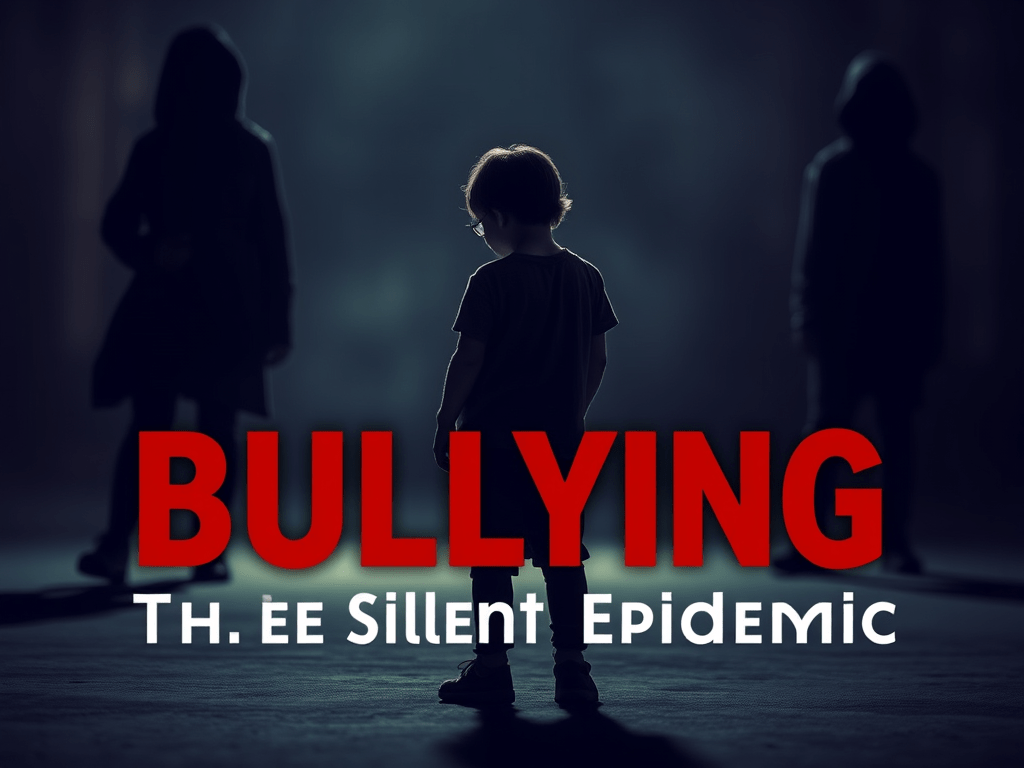
Bullying is not just a passing childhood phase or a mere social inconvenience; it is a deep fissure in society that leaves lasting scars on individuals and communities alike. It took me weeks to gather the courage to write about this topic because, for me, bullying is not an abstract issue—it is personal. I have been a victim of bullying, my children have experienced it, and as a teacher, I have witnessed its devastating effects on countless young lives.
Bullying is not exclusive to a particular group of people; it is perpetrated by the insecure, the mean, and the ignorant. Those who see in others what they desire but lack often resort to bullying as a means to assert dominance, vent their frustrations, or mask their own inadequacies. It is a weapon wielded by those who can’t bear to see someone else’s light shine brighter than their own.
The impact of bullying extends far beyond the moments of humiliation, isolation, and fear that victims endure. It is the root cause of many suicides, psychological traumas, and shattered dreams. While some survivors grow stronger from their experiences, others carry the invisible wounds for a lifetime, unable to fully heal from the pain inflicted upon them.
According to the National Center for Education Statistics, about 20% of students aged 12-18 experience bullying in school. Furthermore, the CDC reports that suicide is the third leading cause of death among young people, with bullying being a significant contributing factor. The effects of bullying are not just psychological, victims are more likely to suffer from anxiety, depression, and even physical health issues. In workplaces, nearly 30% of employees report experiencing bullying, leading to lower productivity and job dissatisfaction.
As a child, I sought to shield myself from further harm by choosing solitude over companionship. I believed that distancing myself from others was my way of reclaiming power—a form of revenge that protected my soul from further damages. However, I now realize that bullying is not just an attack on an individual; it is a systematic attempt to diminish potential, to suppress brilliance, and to force conformity. It is a mechanism used by those with troubled minds to break those who dare to be different, intelligent, or visionary.
Bullying is not only seen in school hallways or workplaces but also in daily interactions. Some bullies manifest their frustration and misery by hitting people’s cars with their doors, releasing their anger on innocent bystanders. Others take pleasure in embarrassing people in public by pointing out their flaws, hoping to diminish their confidence. These acts, though sometimes overlooked, are part of the broader culture of bullying that chip away at the dignity of individuals.
In many ways, bullying is worse than dying in battle or being stranded on a deserted island. It strips a person of their dignity, their confidence, and sometimes even their will to live. It is a silent epidemic that damages not only individuals but also society. When potential leaders, innovators, and changemakers are stifled by the cruelty of bullies, we all suffer the consequences.
We live in a world that often glorifies mediocrity while punishing brilliance. It is for this reason that bullies; driven by troubled household, fear, insecurities, jealousy, or ignorance, use their cruelty as a tool to halt the progress of the brave, the shy, and the gifted. If we are to create a just and enlightened society, we must actively fight against this toxic culture of bullying. We must stand up for those who are targeted, educate our communities on the long-term effects of bullying, and foster an environment where kindness, respect, and acceptance are the foundations upon which we build our future.
Steps to Fight Bullying
Education and Awareness – Schools and workplaces should implement effective anti-bullying programs to educate individuals on the signs, effects, and consequences of bullying.
Encouraging Open Communication – Victims should feel safe speaking up about their experiences without fear of retaliation or shame.
Strengthening Policies and Laws – Governments and institutions must enforce stricter anti-bullying policies, including cyberbullying regulations.
Promoting Kindness and Inclusivity – Encouraging empathy and acceptance in social settings can help prevent bullying behaviors.
Supporting Victims – Providing counseling, peer support groups, and legal assistance to those affected by bullying.
Holding Bullies Accountable – Addressing bullying at its root cause by providing behavioral interventions for perpetrators to prevent future harm.
In my opinion, No one should have to endure the misery of bullying. It is a societal issue that affects not just individuals but entire communities. By raising awareness, implementing stronger protective measures, and fostering a culture of kindness, we can put an end to bullying. We must work together to ensure that no more lives are lost or diminished due to the cruelty of others. The time for change is now, and it starts with each of us taking a stand against bullying.
Your engagement plays a crucial role in fostering a vibrant community. It also ensures that you stay informed about the latest trends and developments. By subscribing, you will receive curated content tailored to your interests. You will also get exclusive updates that will enhance your experience. Don’t hesitate to share your thoughts and feedback in the comments; your voice matters and can influence future discussions. Join us on this journey towards continuous learning and discovery!
I’ve graduated from three colleges, so I’m not here to bash college or discourage anyone from attending. In fact, I believe my last day will be spent at a university because education is a powerful tool. But here’s the thing: not all degrees are created equal. If you’re considering going to college for a degree that won’t set you up for success—one that will just leave you buried in debt with little to show for it—please, reconsider.
College is Not a Party
College isn’t a free-for-all where you get to experience everything you were never allowed to do at home. It’s not about partying, getting into trouble, or creating unnecessary drama. College is an opportunity to develop your independence and prepare for the future. It’s a time to step into the real world and face life’s challenges. Think of it as the ultimate training ground for life. But just like any trip, the journey can either lead you to your dream destination or take you down a path you’ll regret.
The Hard Truth About College
According to a 2020 report by the National Center for Education Statistics, nearly 40% of college students drop out before finishing their degree. Why? Because they’re unprepared for the academic and financial challenges college brings, and they don’t always have a clear purpose for why they’re there. That’s why it’s crucial to understand: if you’re just there for the “experience,” or a degree you’re not passionate about, you might end up wasting both your time and money.
Instead of having a blast with friends, partying, or worrying about relationships, college should be about learning to make great decisions. It’s about choosing the path that leads to personal growth and professional success, not the one that’s lined with distractions.
The Road to Success
Your college experience can be either a steppingstone to your future career or a pitfall that sets you back. Statistics show that students who graduate with a degree that aligns with their career goals are more likely to succeed. According to the Bureau of Labor Statistics, individuals with a bachelor’s degree earn on average 67% more than those with only a high school diploma. But here’s the catch: a degree is only worth it if it leads you to a field with demand. For example, degrees in STEM (Science, Technology, Engineering, Mathematics) fields offer higher starting salaries and job security compared to degrees in areas like liberal arts or fine arts, where opportunities can be scarce.
Making the Most of Your College Years
College is the time to decide whether you want to dive deep into your chosen field or just skim the surface. It’s about mastering your subject, not just completing assignments for the sake of a grade. Students who use their time wisely, who are focused from day one, often end up landing their first job right after graduation or even starting their own business.
But if you choose the road of “fun” and constant distractions, you might find yourself unprepared for what’s next. College isn’t about how many parties you attend or how much free time you have. It’s about building skills, knowledge, and discipline that will last you a lifetime.
Choosing the Right Path
There are countless roads to success, and college can help you take the right one. But beware, there’s also the road that leads to wasted potential—full of distractions and bad decisions. So, make your time in college count. Be smart about your choices, know what you want to achieve, and take action to make it happen.
Ultimately, a degree can be a powerful tool, but it’s up to you to make sure it’s one that will serve your future goals, not just a piece of paper that leaves you with a mountain of debt and few opportunities.
So, before you head to college, take a hard look at what you want to achieve. If you’re willing to put in the work, stay focused, and make the most of every opportunity, college can open doors you never thought possible.
If you found this helpful, don’t forget to hit the subscribe button so you never miss an update! I’d love to hear your thoughts—do you agree with what I said about college, or do you have a different perspective? Drop a comment below and let’s start a conversation!
I was always a caretaker of others’ happiness. I feared losing family and friends if I said no. I sacrificed my emotional well-being and financial well-being just to keep them happy. I couldn’t set boundaries, and in doing so, I failed myself. But life has a way of teaching us lessons, even if we learn them the hard way.
When I finally said no, I lost everyone I had been trying so hard to please. That’s when I realized my place in their lives had always been conditional. I was only valued as long as I served their needs. It was a painful awakening, but it was also freeing. I wasn’t their friend or family; I was their convenience. And when I stopped being useful, I stopped existing to them. It is tragic to discover your worth in someone’s life. It is also eye-opening to realize that you were seen as nothing more than a tool.
Saying no was not just necessary—it was an act of self-respect. I chose to save my dignity and protect my sanity, and that decision changed everything.
Breaking Free from Conditional Love
Many of us are raised to believe that love must be earned through self-sacrifice. We are taught that to be loved, we must always be available, always say yes, and always put others first. Those of us who grew up receiving conditional love often struggle to distinguish between genuine affection and manipulative dependency.
But here’s the truth: we are not born to be everyone’s savior. Our existence is not defined by how much we can fix or carry for others. When we internalize this, we unlock a new level of peace and freedom.
We were not placed in this world to fulfill someone else’s purpose. We are here to find our own. We are not the dumping ground for other people’s mistakes, nor are we responsible for cleaning up their messes.
As Brené Brown wisely stated: “Daring to set boundaries is about having the courage to love ourselves, even when we risk disappointing others.”
The Weight of Guilt: A Hidden Enemy
The burden of guilt is one of the greatest sources of suffering. This is true whether in the form of depression, addiction, or even suicidal thoughts. The feeling of not doing enough, not helping enough, not being enough.
The numbers confirm this painful reality:
A study by the American Psychological Association found that 70% of people struggle with saying no, fearing rejection or conflict.
Research from Mental Health America shows that people-pleasing tendencies increase the risk of anxiety and depression by 50%. These tendencies lead to emotional exhaustion. They also cause resentment.
According to the National Alliance on Mental Illness (NAMI), 43% of people experiencing burnout attribute it to the pressure. They feel that they must always be there for others. This happens at the expense of their own well-being.
But you owe no one your peace.
The first step to freedom is understanding that love, especially from parents, should be unconditional. If they did not manage to give a safe environment, they can’t dictate your life. Often, the struggles we face as adults are deeply rooted in our childhood experiences. Some of us are fortunate to have guidance in the right direction. Others face the challenges of life on their own.
For those of us who had to figure everything out the hard way, the journey can be long and painful. Some will succeed in breaking free, while others never escape the cycle. But one thing remains true—we are not responsible for healing others at the cost of breaking ourselves.
As the brilliant poet and novelist Rupi Kaur wrote: “You do not just wake up and become the butterfly. Growth is a process.”
Final Thoughts
Setting boundaries is not selfish; it is necessary. It is a declaration that your worth is not measured by how much you can give or endure. It is a commitment to your well-being, your peace, and your purpose.
So, if saying no means losing people who never truly valued you, let them go. Because the right people—the ones who love you unconditionally—will respect your boundaries, not punish you for them.
As the great Maya Angelou said: “When someone shows you who they are, believe them the first time.”
Your engagement plays a crucial role in fostering a vibrant community. It also ensures that you stay informed about the latest trends and developments. By subscribing, you will receive curated content tailored to your interests. You will also get exclusive updates that will enhance your experience. Don’t hesitate to share your thoughts and feedback in the comments; your voice matters and can influence future discussions. Join us on this journey towards continuous learning and discovery!
Education is the foundation of any society. It shapes the future of individuals, communities, and nations. In the U.S., though, the education system is facing deep-rooted issues. These issues are affecting not only students but also the overall well-being of society. Despite being one of the wealthiest nations in the world, the U.S. fails to offer a fair and high-quality education to all children. This failure has created a system that produces an alarming number of unprepared graduates. This contributes to societal problems like poverty, crime, and inequality. If the U.S. wants to regain its position as a leader in global education, it must radically reform its education system.
The Current State of U.S. Education
One of the biggest issues facing the U.S. education system today is the vast disparity between schools. While some schools—typically those in affluent areas—offer world-class education, others, especially in poorer neighborhoods, are severely underfunded and under-resourced. These schools often lack basic educational materials. Items like textbooks, computers, and trained teachers are missing. This leaves students at a significant disadvantage. According to recent reports, U.S. schools spend more on education per student than most countries, yet the outcomes are mediocre at best.
Another issue is the focus on standardized testing. While some argue that testing helps assess students’ progress, it often fails to capture a student’s true potential. These tests place immense pressure on students. They focus on rote memorization rather than creativity, critical thinking, and problem-solving. These skills are vital in the real world. The emphasis on testing also ignores the emotional and social development of students, which is equally important for long-term success.
The Root Causes of the Problems
The issues within the U.S. education system are symptoms of a larger societal problem. It stems from the failure of policymakers to focus on education. They also neglect the well-being of children. Many policymakers often send their children to elite private schools or have them study abroad. They have little understanding of the struggles faced by children in underfunded public schools. This creates a disconnect between the government and the communities it claims to serve.
The education system seems to treat students as products to be processed. They are not seen as individuals with unique needs and potential. This mindset is perpetuated by a profit-driven educational model. It often results in students being “trained” for cheap labor or criminal activity. Students are not educated to become thoughtful, independent, and creative individuals. The lack of value placed on teachers also contributes to the problem. Teachers, who are at the heart of the education system, are often underpaid, overworked, and undervalued. As a result, many talented individuals are discouraged from pursuing teaching careers.
A Call for Change
To fix the education system, we must start by acknowledging the root causes of its problems. We should rethink our approach to teaching and learning. Education can not merely be about pushing students through a system of tests and grades. It must be about fostering critical thinking, creativity, and emotional intelligence.
The first step toward reform is to place value on teachers. Teachers are the backbone of the education system, yet they are often the most undervalued professionals in society. To improve education, we need to pay teachers competitively—on par with doctors and tech professionals. We need to give them the support and resources they need to thrive in the classroom. Teachers should be continuously trained. They should be equipped with knowledge of human development, psychology, and cultural sociology. This way, they can adapt to the needs of every student. Teachers should have a deep understanding of the subjects they teach. This enables them to inspire passion. It also fosters curiosity in their students.
Next, we must redesign the curriculum. It should focus on the skills that matter most in the 21st century. These include critical thinking, problem-solving, collaboration, and empathy. Schools should not just teach students how to pass tests but how to approach problems in creative and innovative ways. Project-based learning, hands-on activities, and real-world applications should replace outdated rote memorization techniques.
Standardized testing should be drastically reduced. Assessments should measure a student’s ability to think critically. They should gauge how students collaborate with others and apply their knowledge. Tests should not decide a student’s future success. Instead, a more holistic approach should be used to evaluate their potential.
Finally, it is crucial that we tackle the funding gap between schools in wealthy and impoverished neighborhoods. No child should be at a disadvantage because of their zip code. This means reforming the way schools are funded, so that every student, regardless of background, has access to quality education. We should also empower parents to advocate for their children’s education. They should consider alternatives, like homeschooling or private schools, if the public system fails to meet their needs. Nonetheless, we must make sure that these alternatives do not lead to a further segregation of the educational system.
The U.S. education system is in desperate need of reform. To create a society where every child can succeed, we must invest in teachers. We need to rethink the curriculum and reduce the reliance on standardized tests. It is crucial to guarantee fair access to resources for all students. By doing so, we can cultivate a generation of students who are not only academically proficient but also socially responsible. They will be emotionally intelligent. They will also be equipped to tackle the challenges of the future. It’s time for policymakers to stop prioritizing their own interests and start serving the children who will shape the future. Only then can we start to rebuild the educational system. It will become one that is truly worthy of the children it is meant to serve.
To my readers:
Thank you for taking the time to leave your thoughts! I truly appreciate your feedback and encourage you to share more insights in the comments below! If you enjoyed the content, please consider subscribing to my website for more updates!
As women, we often find ourselves balancing many roles—whether it’s being a loving wife, a nurturing mother, or a dedicated worker. But what if I told you that no matter where you are in life, whether your kids are grown or you’re looking for something new, it’s never too late to follow your passions and pursue your education?
I’ve lived this truth myself. For many years, I poured my heart and energy into raising my children, making sure they had everything they needed to thrive. Now that my kids are in college, I find myself in a new chapter, one where I’m able to focus on my own dreams, too.
It wasn’t always easy. For years, I felt like I had to prove myself—whether as a wife, a mother, or in my career. But I came to a powerful realization: the journey of learning and growing doesn’t stop when you have children. In fact, it can be a whole new beginning!
Now, I’m diving into a new path. I’m starting this blog, pursuing my education, and focusing on what makes me feel fulfilled. And you can do the same.
It’s Never Too Late to Start
Whether you’re in your 30s, 40s, or 50s, the time to start something new is now. You don’t have to wait for the “perfect” moment. Life may change, but your ability to learn, grow, and succeed remains limitless. In fact, your experiences—whether in raising children or building a family—can give you the strength, resilience, and insight that only time can provide.
I know how it feels to be caught in the whirlwind of life. But now that I’ve refocused on my own education and passions, I see the world differently. There is so much more to achieve. Women can succeed at any stage of life, and education—whether formal or self-guided—is the key to unlocking that success.
A Personal Example: How I’m Rebuilding My Life
After spending so many years helping my kids build their future, I decided to do the same for myself. Now, I’m committed to furthering my education, starting a blog, and working toward goals I once thought were out of reach.
I want to encourage you, whether you’re considering going back to school, learning a new skill, or even starting a business. It’s all possible, and I’m living proof. You don’t have to wait for your kids to be grown, or for your life to slow down. You can take action today, no matter your age or stage of life.
What Can You Do Right Now?
Assess your passions and goals: What is it that excites you? What do you wish you had the time to learn or do? You’re never too old to start exploring.
Look for learning opportunities: You can find online courses, evening classes, or self-paced learning. There’s no shortage of resources, and many are free or affordable.
Start small: Whether it’s reading a book, taking a class, or enrolling in a degree program, take one step at a time. Every small effort counts.
Create a support system: Surround yourself with people who encourage your growth. Whether it’s a mentor, a supportive family, or an online community, make sure you have the encouragement you need.
Remember, success is not defined by age. It’s defined by your courage to go after what you want, no matter when or where you start. You can start fresh, redefine your purpose, and make your dreams a reality.
I believe in you, and I know you have everything it takes to succeed—just like I am. Let’s make this journey one of growth, independence, and fulfillment!
Hello, I am Noelle Sophie, and I am so excited to welcome you to my blog, Smart & Independent. As someone who’s always believed in empowerment and independence, I decided to share my journey and insights with others.
This blog is dedicated to helping women (and anyone!) become more empowered, confident, and financially independent. I’ll be sharing tips on personal growth, financial freedom, and living a life that’s true to yourself.
I started Smart & Independent because I know what it’s like to feel stuck. I was also unsure of how to move ahead in life. Over the years, I’ve learned that making smart decisions is crucial. Whether the decisions are financial, personal, or professional, they create the foundation for independence and success.
For many years, I worked hard to prove myself to others—whether as a wife, daughter, or professional. I realized that true fulfillment comes when we make decisions based on our own needs and aspirations. It does not come from just others’ expectations. Now, I’m here to share what I’ve learned. I want to help you take the steps toward creating your own version of success. This also means achieving your own sense of freedom.
On this blog, I’ll cover topics like:
Building financial independence,
Overcoming societal pressures and expectations,
Personal growth and self-improvement,
Finding confidence to live life on your terms.
This is a space for those who wonder. For those who’ve been told to stay silent, shrink small, or accept things that make no sense. I write to remember what matters. I write to make sense of the world. I write to break limits, gently but boldly.
I hope you find inspiration here and feel encouraged to take action toward your own empowerment.
What about you? What challenges are you facing when it comes to independence and confidence? Feel free to leave a comment below; I’d love to hear your thoughts!
If you’re ready to embark on this journey with me, make sure to subscribe for updates on new posts. Thank you for being here, and I’m excited to get started!








 Community Empowerment