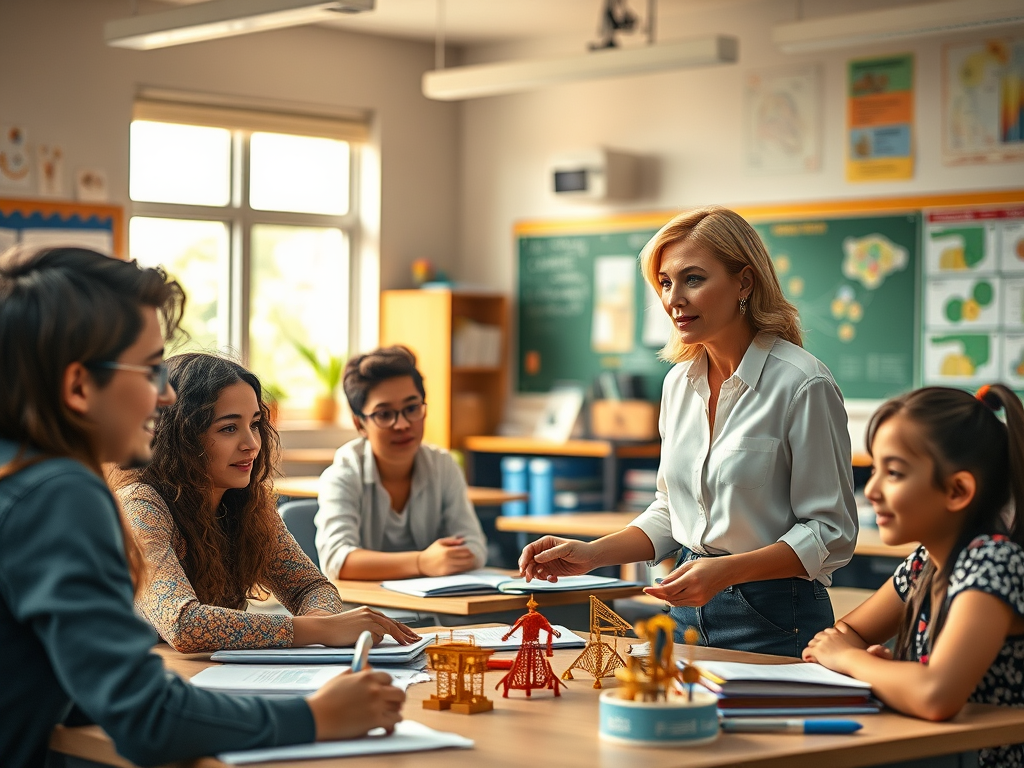
A Vision of an Effective, Joyful, Student-Centered Classroom for all
I wish to be in a classroom where teaching is effective, students are at the center of education, and learning is joyful and engaging. I see a space where every student feels seen, supported, and empowered; where visuals, projects, and group study methods replace passive listening and transform learning into active exploration.
In this ideal classroom, learning is not a transfer of facts but an invitation to think, create, and connect. John Dewey, a foundational thinker in progressive education, wrote in My Pedagogic Creed that “education is not preparation for life; education is life itself” Teaching and learning are continuous, meaningful, and rooted in experience.
This classroom thrives on student engagement and interaction. Discussions are vibrant and respectful. Students explain their thinking aloud — what mathematicians call math talk — because they practice reasoning, articulation, and critique together. Herbert R. Kohl, an advocate for alternative education, believed in the open classroom where students explore ideas collaboratively and creatively.
Teachers in this space are facilitators of learning, not merely transmitters of content. They guide students to make connections between ideas, ask essential questions, and pursue projects that integrate knowledge across disciplines. Projects are real: building models, solving open-ended problems, creating visual representations, and working in small teams to learn from one another. Anne Haas Dyson emphasizes that “there is nothing lonelier than standing in front of a class when I’m not sure they are intellectually with me, and nothing is more satisfying than when we are all making progress together.”
The learning environment respects differences in styles and strengths. Students are joyful, confident, and proud to learn. They use visuals, group methods, and relevant technology when appropriate. They feel comfortable asking questions and pursuing deeper understanding. This aligns with contemporary research on active learning and learner-centered teaching routines, which show that structured group discussion and student responsibility improve understanding and participation.
Students are the heart of the classroom. This vision reflects the educational culture seen in high-performing systems like in Estonia, where students are encouraged to learn deeply and think critically. Estonia consistently ranks at the top in international assessments and nurtures environments where learners can explore and grow.
In such a classroom:
- Teaching is effective: aligned with students’ needs and interests.
- Students are joyful and engaged: learning feels purposeful, not forced.
- Activities are interactive: visuals, projects, math talk, and group work promote deep understanding.
- Everyone thrives: each student contributes and learns from the group.
This classroom is more than a space, it is a culture of curiosity, respect, and growth. It is where every learner is both a student and a teacher, and where education builds not only academic skills but confidence, collaboration, and a lifelong love of learning.
For every effective and passionate educator!
NM
 Community Empowerment
Leave a comment