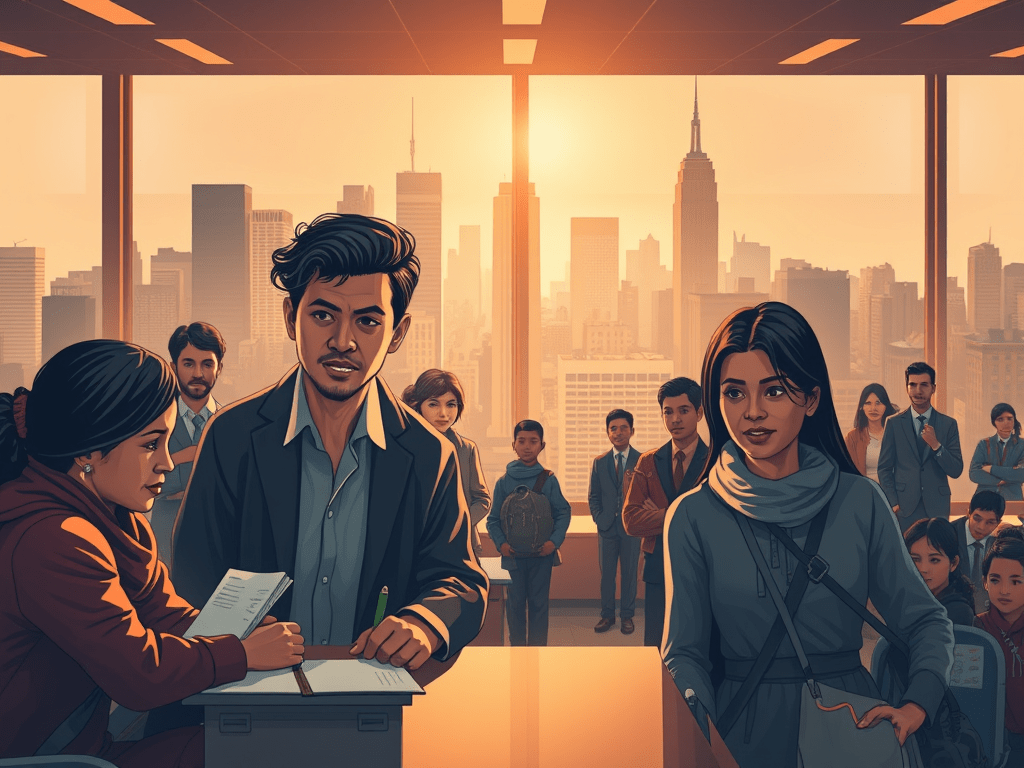
Will the World Ever See Immigrants as Partners in Progress, Rather Than People Who Must Constantly Justify Their Presence?
Immigration has been a cornerstone of human history, shaping civilizations, bolstering economies, and enriching cultures worldwide. Individuals migrate for myriad reasons: economic opportunities, political instability, education, and personal safety. While the benefits of immigration are evident, it also presents challenges for both migrants and host countries.
Advantages of Immigration:
For Host Countries:
Immigrants significantly contribute to economic growth by expanding the labor force and increasing consumer spending. Notably, as of 2024, 46% of all Fortune 500 companies were founded by immigrants or their children, underscoring their pivotal role in driving innovation and entrepreneurship. American Immigration Council
For Immigrants:
Relocating to a new country often grants access to enhanced opportunities, including superior education, healthcare, and personal safety, culminating in an improved quality of life.
Drawbacks of Immigration:
For Immigrants:
Integrating into a new society can be daunting. Challenges such as identity crises, discrimination, and cultural barriers can impede adaptation.
For Home Countries:
Developing nations often experience “brain drain,” where skilled professionals emigrate for better prospects abroad, potentially hindering domestic economic and developmental progress.
For Host Countries:
Assimilating large immigrant populations necessitates policies that promote social cohesion. In certain instances, immigration can lead to labor exploitation or intensify anti-immigrant sentiments.
The Hidden Cost of Immigration: Is it a System Built on Exploitation?
Immigration is frequently depicted as a gateway to opportunity—a fresh start in a land of promise. Yet, for numerous skilled immigrants, the reality is more complex. Instead of seamlessly integrating into their new societies, they often face systemic barriers that compel them to start anew, not due to a lack of talent or qualifications, but because the system profits from their struggle. This raises an uncomfortable question: Is immigration structured to uplift individuals or to exploit them?
Not All Immigrants Contribute. Let’s Talk About That Too.
It’s an uncomfortable truth that some immigrants may not seek to uplift or contribute meaningfully. They might misuse the system, expect rewards without effort, and, regrettably, some may raise children without instilling discipline, values, or ambition. This can perpetuate cycles of dependency and tarnish the reputation of the broader immigrant community.
However, this isn’t solely an immigrant issue; it’s a human issue. Every society has individuals who take rather than give, who blame instead of build. Whether native-born or foreign-born, traits like laziness, entitlement, and poor parenting are universal challenges. That said, when such behaviors are exhibited by immigrants, they can be more pronounced, as immigrants are initially guests in their new countries. Guests, especially in host nations facing their own struggles, have a moral and cultural responsibility to contribute positively, show respect, and raise their children to be constructive members of society.
Why Do People Migrate?
Migration is driven by a blend of personal aspirations and pressing needs. At its core, migration often revolves around seeking a better life—though “better” varies for each individual. Key reasons include:
- Economic Opportunity:
Many migrate to find jobs, escape poverty, or earn more than they could at home. For instance, immigrants have helped expand the U.S. labor supply, paying nearly $580 billion a year in taxes and possessing a spending power of $1.6 trillion annually. - Education:
Pursuing better schooling, higher education, or training opportunities, often for themselves or their children’s future. - Safety and Escape:
Fleeing war, violence, persecution, or disasters. Some are refugees seeking safety where their lives or beliefs are not threatened. - Family and Love:
Reuniting with loved ones, marrying, or raising children in a more stable or promising environment. - Climate and Environment:
Escaping drought, floods, or environmental degradation that make living or farming untenable. - Freedom and Dignity:
Seeking freedom of expression, religion, or identity—basic human rights that might be denied in their home country.
Is Immigration a Normal Cycle of Life?
Migration, undertaken with courage and dignity, is among humanity’s oldest and most potent means of adaptation, growth, and survival. It should be honored, not feared. Immigration is not just normal; it’s natural and ancient. Since humanity’s inception, people have moved—from one village to another, one continent to the next—in search of safety, survival, connection, and growth.
- We are explorers by nature:
Humans have always moved to adapt to climate, find food, or chase opportunity. - Civilizations were built by migrants:
From the Silk Road to the Americas, movement has shaped culture, language, and innovation. - Change is constant:
Economic shifts, wars, education, and love push and pull people across borders, generation after generation.
Even our DNA testifies to this: we are all mixed. Every person alive is a living product of human movement. Immigration is not a disruption of life; it is life. The desire to move toward something better is one of the most hopeful and human instincts. Every wave of migration renews the world with fresh energy, ideas, and resilience.
Why Do Host Countries Struggle to See the Added Value of Immigrants?
Host countries often grapple with recognizing the added value of immigrants due to a mix of fear, misunderstanding, and short-sightedness. Here’s why:
- Fear of Change:
People naturally cling to what they know. When new languages, cultures, or customs emerge, some feel their identity is being threatened, even when it’s not. - Limited Awareness:
Many don’t see how immigrants fill essential roles: growing food, caring for elders, building homes, or driving innovation. For example, immigrants constitute over 25% of agricultural workers and 54.3% of graders and sorters of agricultural products in the U.S. - Economic Anxiety:
In times of job loss or inflation, immigrants become scapegoats. Some believe they’re “taking” jobs or resources, though research shows immigrants often create more jobs and contribute more to taxes than they receive in services. - Negative Narratives:
Media and politics can fuel suspicion. Instead of highlighting the hardworking immigrant mother, the brilliant student, or the devoted nurse, stories often focus on crime or division. - Lack of Connection:
It’s easy to fear people you don’t know. But when someone knows an immigrant personally, their perception changes. Empathy replaces assumption.
Immigrants are bridges, not burdens. They carry not just labor but loyalty, sacrifice, and dreams. Often working twice as hard for half the recognition. If host countries opened their eyes and hearts, they’d see immigrants not as “others,” but as co-builders of a shared future.
Why is there still “illegal immigration”?
Because borders still exist in a world where needs don’t. People are hungry, scared, ambitious, or simply seeking dignity. When the legal doors are too small or shut tight, people knock harder—or climb over.
The root causes of illegal immigration are rarely about law-breaking, they’re about lifesaving.
Why are borders still here, if we all struggle anyway?
The world is interconnected, yet we hold onto borders because of:
- National identity: People fear losing their culture or language.
- Security concerns: Governments want to control who enters.
- Resource distribution: Some fear that more people will stretch public services.
- Power dynamics: Wealthy countries benefit from a system where labor is cheap, but control is tight.
Borders are often less about protection, more about preserving advantage.
What could be the solution?
There’s no one-size-fits-all, but real change must begin with compassion and realism:
1. Fix the Root Causes
If people didn’t have to flee hunger, violence, or despair, they wouldn’t. That means global cooperation to invest in education, stability, and opportunity where people live.
2. Build Fairer Pathways
Simplify and expand legal immigration, especially for workers, students, and families. Make the process humane, not humiliating.
3. Respect Human Rights
No matter how someone enters, treat them with dignity. Undocumented does not mean undeserving.
4. Redesign Borders as Bridges
Controlled openness: we can protect public safety while welcoming those who want to build and contribute. It’s not about erasing borders. It’s about rethinking their purpose.
It seems to me that the future isn’t “open borders,” but open minds and shared responsibility. Because if one of us is drowning, the answer isn’t to build a higher wall, but it’s to extend a hand.
The former UN Secretary-General Kofi Annan once said:
“We need to keep in mind that migration is not a problem to be solved, but a human reality to be managed.”
If this message spoke to your heart or opened your mind, don’t forget to comment, subscribe, and share with someone who needs to hear it. And stay tuned for Part Two, where we’ll explore how immigrants navigate life in the U.S. with courage and resilience.
 Community Empowerment
Leave a comment